News·
Stavanger company receives NOK 7 million to solve bacterial problem costing seafood industry billions
Stavanger: Analysis and biotechnology company NordicDx receives 7 million kroner from the Fisheries and Aquaculture Industry Research Funding (FHF) to develop a new, innovative rapid test for Listeria monocytogenes detection.
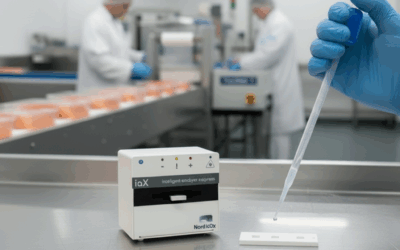
Stavanger: Analysis and biotechnology company NordicDx receives 7 million kroner from the Fisheries and Aquaculture Industry Research Funding (FHF) to develop a new, innovative rapid test for the detection of the notorious bacterium Listeria monocytogenes.
This takes place through a PIB project (company-based project) with a total budget of just over 15 million kroner. The project is a close collaboration between Nofima as academic research partner, Cermaq Norway as industrial partner, and Assaya as technology partner. Together the parties will tackle one of the biggest food safety challenges in the food industry – with particular focus on salmon farming and the aquaculture sector.
A silent threat in food production
Listeria monocytogenes is known as one of the biggest challenges in global food production. The bacterium can survive and multiply even under cold storage conditions, and outbreaks can have serious consequences for people, food safety and the economy.
It takes time and significant resources to detect Listeria, and results often come too late to prevent spread or contamination. A rapid test that quickly gives reliable answers could be a game changer in the work of monitoring, preventing and combating the bacterium.
An ambitious project with global relevance
With support from FHF, NordicDx, in collaboration with Nofima, Cermaq and Assaya, aims to develop an innovative methodology combining speed, reliability and ease of use. The goal is a test that can be used flexibly in production chains, both in the field and in laboratories.
– This project could lead to a tool that becomes a gamechanger for the food industry, says Tommy Selnes, CEO of NordicDx, pointing out that the solution will set a new international standard for handling bacterial risk – not only in the aquaculture industry, but globally in all types of food production.
Nofima, Cermaq and Assaya contribute leading research expertise and valuable industrial experience. The collaboration ensures that the technology is developed with academic grounding and practical utility for those who actually face these challenges day to day.
The project could strengthen Norway's position as a world leader in safe seafood production, and contribute to taking the aquaculture industry to a new level in food safety.
– Stavanger municipality has supported the establishment of NordicDx. We champion innovative spin-offs in the aquaculture sector, and it is good to see how the company works closely with academia, says the business director of Stavanger, Anne Woie.
– Listeria is a global challenge. If we succeed, this rapid test will be relevant far beyond Norway's borders, says Morten Sivertsvik, research director in the processing technology department at Nofima.
– The rapid test could become a tool that makes it possible to detect and stop problems at an early stage, save enormous sums and strengthen consumer confidence in safe food, says Morten Sivertsvik.
– Blue Planet, at the aquaculture cluster Stiim Aqua Cluster, has followed NordicDx for several years, and the company has participated in our growth programme Ocean of Opportunities. Such entrepreneurial companies that find solutions to important challenges are exactly what Norwegian business needs. We look forward to following the project further, says CEO Eivind Helland of Blue Planet.
About the project
- Grant: 7 million kroner from FHF
- Total budget: just over 15 million kroner
- Project type: PIB (Company-based project)
- Partners: Nofima, Cermaq Norway and Assaya
- Purpose: develop a rapid test for the detection of Listeria monocytogenes
- Timeline: September 2025 – August 2028